

09/04/2026 Davis spent a decade working with indigenous councils and immersing himself in ancestral traditions, returning recently to the industry with a transformed perspective on what intentional mixology truly means
Russell "Wishka" Davis is not your typical mixologist. Internationally recognized as a bartender, television personality, and cultural advocate, Davis first rose to prominence as an expert cast member on Bar Rescue (Paramount) and later as a behind-the-scenes consultant and co-developing producer on Drink Masters (Netflix), where he helped shape the show's emphasis on creativity, craftsmanship, and cocktail culture's deeper narratives. Named Bartender of the Year in 2012 by the American Nightclub and Bar Organization, he appeared to be at the pinnacle of a glittering career. Until he walked away from it entirely. At the height of his success, Davis underwent a profound personal transformation, reconnecting with his indigenous roots and the Eagle and Condor Prophecy, a spiritual belief foretelling renewal and reunification among Native peoples across the Americas. He adopted the name Wishka — a word from the Cabécar language meaning "Cat," inspired by indigenous children who noticed his blue eyes and likened them to the animal. Over the following decade, he worked alongside indigenous councils, led humanitarian expeditions, helped preserve ancient sites, and studied ancestral drinking traditions at risk of disappearing (read more about his insights here).
Today, through his company Wishka.org, he operates as a hospitality consultant, educator, and spirits industry advisor, and brings all of that hard-won wisdom to his role as a judge at the Bartender Spirits Awards 2026. We sat down with him to talk roots, rituals, and the next evolution of the craft.
Edited excerpts from the interview.
1. How did you get started in the bartending and hospitality industry?
I was born into it. I am half Mexican on my mother's side, and my maternal family owned a small chain of Mexican restaurants called Molina's in Houston, Texas. My great-grandfather purchased the location and started it after saving money working as a dishwasher when he first came to the United States around the time of the Mexican Revolution. It would go on to become the oldest family-owned Tex-Mex restaurant in Houston and a chosen favorite of presidents and celebrities alike.
Mama and Papa — my great-grandparents, who I was lucky enough to grow up around — were the most generous and gracious hosts I had ever seen. Watching Papa work a crowded room, whether at a family gathering or in the restaurant on a Friday night, was something special. And as a child, the coolest part was the bartenders. Flipping bottles, making all the grandchildren virgin piña coladas and daiquiris, and slipping us bowls of cherries while our parents enjoyed themselves. Mexican family parties were the best.
I carried those memories with me into adulthood. When I was behind the bar day to day, I was always playing some version of those cool bartenders from my family's restaurant.
2. Can you tell us about your current role and the concept behind your bar?
Currently, I work as a consultant across various hospitality projects — menu creation, bar layout and design, and staff training — through my company Wishka.org, while also returning to something I've done for many years: working behind the scenes with spirits brands on positioning, storytelling, and how they truly live inside real bar programs. Much of that work isn't always visible. It's about shaping how a brand shows up in the hands of bartenders — how it's understood, how it's used in cocktails, and how it ultimately connects with the guest. That bridge between brand and bar has been a core part of my work for a long time, helping build and refine concepts that don't just look good on paper, but actually perform in the real world.
Alongside that, I've been developing and leading online workshops and bartender training programs focused on holistic, ancestral, and intentional mixology, bringing deeper meaning back into the craft while still honoring technical excellence. I recently completed my comeback menu project in Frisco, Colorado — the first time I had been fully back behind the stick in many years. It reminded me how much I love the craft at its core.
I'm now working on another bar concept that I can't speak about just yet, but what I can say is that I enjoy building concepts that push boundaries, whether through flavor, experience, or philosophy.
3. What excites you most about working behind the bar today?
The opportunity to shift what the bar actually represents. For a long time, bars were simply places to drink. Now, they are becoming spaces for connection, places where people come to feel something, whether that's celebration, healing, or simply being seen.
What excites me is bringing intention back into the craft. Not just making a great drink, but creating an experience. Understanding that what we serve are not just cocktails, but carriers of energy, culture, and history. There's also a deeper responsibility now. The bartender isn't just a technician. They are a host, a guide, sometimes even a gatekeeper of the room's energy. A facilitator of experience. When done right, working behind the bar becomes less of a job and more of a role in something meaningful, something more ancestral.
4. What trends are you currently seeing in the spirits and cocktail space?
Holistic, intentional, and ancestral — these are key, and will only become more so. Words like ritual, ceremony, and sacred are becoming buzzwords, but they carry much deeper meaning than most people realize. What I'm seeing now is the industry beginning to truly understand that depth.
Post-pandemic, everything changed. People were forced to confront loneliness, addiction, and their relationship with consumption. As a result, the modern consumer is far more educated and intentional. People are drinking less, but when they do drink, they want it to matter. We're seeing a return to ancestral ingredients, fermentation, natural processes, and culturally rooted practices. There is also a major shift toward transparency; where products come from, how they're made, and who is behind them.
The next evolution isn't just better cocktails, it's more conscious consumption.
5. Are there any categories or styles of spirits you are particularly excited about right now?
I'm very interested in both non-alcoholic and alcoholic products that function beyond just flavor. Think edible extracts, bitters, essences, and spirits that carry potential healing qualities — things like mushroom-infused spirits or adaptogenic formulations that, when used consciously, may actually support well-being rather than simply facilitate intoxication.
I'm also drawn to products that have real stories backed by true intention. It shows that brands are doing the hard work that comes with creating something meaningful. And most of all, I'm drawn to ancestral expressions — ancient fermented recipes, traditional preparations, and the kinds of potions that have survived generations, used by curanderos, healers, and communities for centuries. Those aren't stories you can manufacture. They carry something real. When approached with respect and reciprocity, they offer a deeper connection — not just to the past, but to each other.
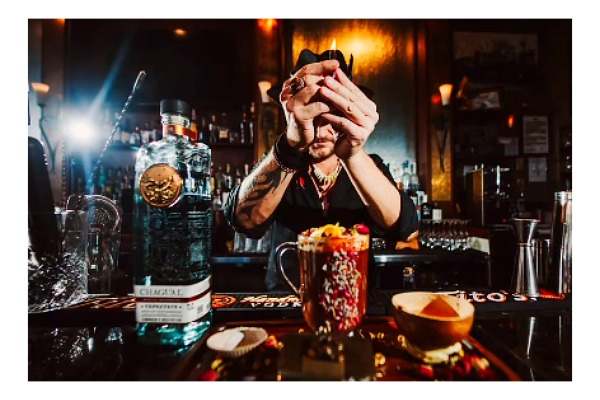
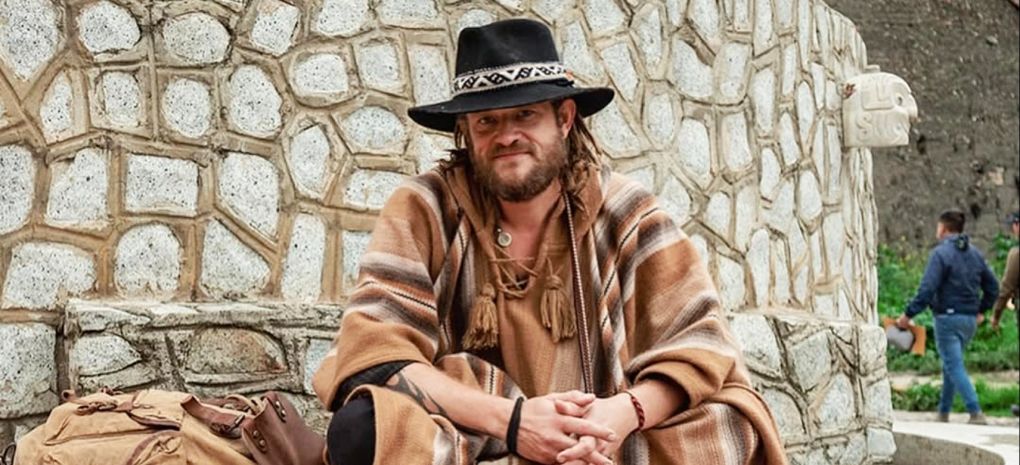
In Frame: Russell Davis (Source: Instagram)
6. When it comes to adding a new spirit to your bar, what are the key factors you consider?
This has evolved significantly for me. There was a time when it was primarily about flavor and performance in cocktails. Now, I look deeper — at the spirit behind the spirit. Where does it come from? What is its impact? Does it deserve to be consumed? Is it contributing something positive to the world?
We've learned that not everything we've been told about what goes into these products is true. That awareness shifts your perspective.
Of course, taste still matters. But after years of working with indigenous communities and experiencing ingredients and preparations beyond conventional understanding, I've learned that what is good for you — and good for the world — doesn't always align with what is immediately pleasurable. There is another layer of enjoyment: the knowing. Knowing that what you are consuming carries integrity, purpose, and positive impact. That is where I see the industry moving — toward more conscious, aware, and spiritually aligned consumption.
7. What makes a spirits brand stand out to you?
What is it doing for the world? What role does it play beyond the bottle? Who does it support? What ecosystems, communities, or traditions does it uplift?
The brands that stand out have clarity of purpose. They know why they exist, and that purpose extends beyond profit. There is also a reciprocal element — it's not just what the brand gives to the world, but whether the world wants to support it in return. You can feel when something is built with intention versus something built purely for market positioning. And in today's landscape, that difference matters more than ever.
8. How do you usually discover new spirits brands?
Honestly, a lot of it comes through Instagram and social media. I find a surprising number of interesting products by paying attention to what people in my network are sharing, as well as industry platforms like Bar Magazine. Sometimes I simply follow the algorithm and see where it takes me. I've made some incredible connections that way, and I'm not afraid to reach out directly to brands that align with my world — whether to collaborate, create, or consult. If you want to see what I'm paying attention to in real time, that's where I share and engage most.
Of course, travel plays a huge role as well — being on the ground, exploring backroads, and discovering things that haven't yet reached wider markets.
But at the end of the day, human connection still matters most. Energy matters. Presence matters. No matter how strong a brand is online, the people representing it in real life — its ambassadors, owners, distillers, sales representatives — must be able to walk into a room and truly connect. That will always be the deciding factor.
9. What advice would you give to spirits producers looking to get listed in top bars?
There are a few realities to understand. You either need strong funding, strong relationships, or a truly compelling product, brand, and story — ideally, all three.
Placement at top bars is highly competitive, and in many cases it involves financial investment. Shelf space and menu placements can come at a cost; that's simply part of the current business model for many high-profile venues. At the same time, the real gatekeepers are the bar managers and lead mixologists. They are the ones curating the program and deciding what makes it onto the shelf.
If you want access, work with people who understand that world. A strong hospitality or mixology consultant can open doors, guide your positioning, and help shape your brand into something that resonates on the front lines of the industry. That insight is often undervalued. Too many brands rely solely on corporate strategy without listening to the people actually using and selling the product daily.
The most successful brands are the ones that bridge both worlds. Don't just use your bartenders and mixologists for their drink recipes — they are far more valuable than that. But ensure they receive proper reciprocity for the intellectual property they are willing to share.
Beyond placement, marketing at the point of experience is becoming increasingly important. How your product shows up in the environment — how it influences the final decision in the moment — is the next frontier. I'm actively working on this now, developing content that lives directly inside bars, hotels, restaurants, and even rideshare environments through in-venue television systems, reaching guests at or near the point of purchase. That final moment of decision is incredibly powerful, and the brands that understand how to show up there with intention will have a significant advantage.
10. Outside of work, what inspires you and keeps your creativity flowing?
My work in service to the indigenous Eagle and Condor Prophecy of healing and unification.
I live many lives and wear many hats. At times I am a mixologist, consultant, and educator through Wishka.org, developing workshops and training programs that bring holistic, ancestral, and intentional practices back into the craft. Other times, I serve alongside indigenous leaders as an ambassador, advisor, or liaison — helping protect sacred people, places, and traditions, leading expeditions, and helping to secure, preserve, or activate ancient and often hidden sites. This has included everything from supporting communities in crisis to organizing expeditions to preserve or activate ancient sites and deliver aid.
Much of this path came from over a decade of studying ancestral, indigenous, and often disappearing drinking traditions — recipes, ingredients, and rituals at risk of being lost. That work changed everything for me. It gave me a deeper understanding of what these "spirits" have always represented. Across cultures, alcohol was often referred to as "spirits" for a reason — body, mind, spirit.
There is a growing awareness now, even if not yet fully understood, that intention, energy, and environment play a role in what we create and consume. Some traditions believe that we are entering a time where the "good spirits" return to the spirits. And in many ways, that is how I see the role of the modern bartender — not just as a creator, but as an alchemist helping guide that return.
Header image sourced from Russell Davis (Instagram).
Enter the 2027 Bartender Spirits Awards for expert evaluation from U.S. bartenders and on-premise buyers. Receive detailed scores, practical feedback on how to improve, market and sell your spirits, and see who judged your products.