


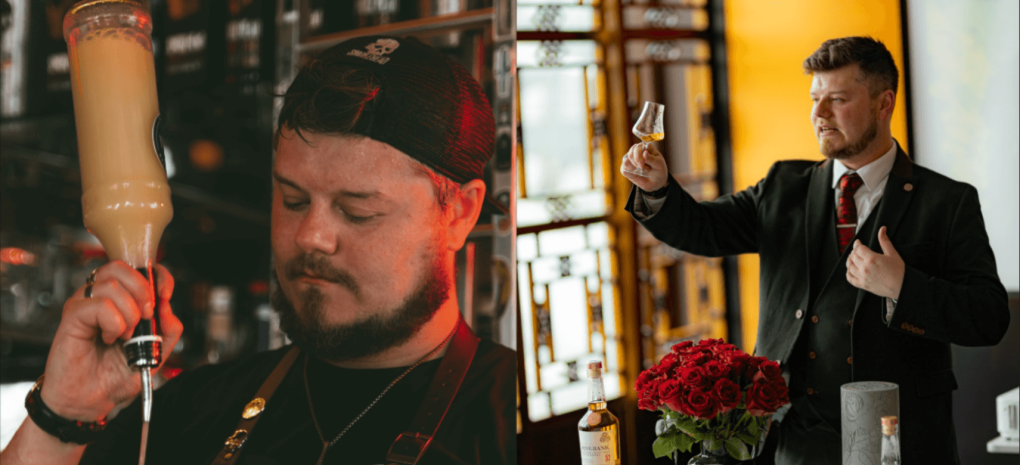
13/10/2026 From tasting notes to service realities, Michael Brown discusses how spirits brands can become valuable partners in a bartender’s world.
Behind every successful spirits brand is the challenge of turning a distinctive product into a bottle that bartenders trust and guests return to. Michael Brown of Ian Macleod Distillers brings a producer’s perspective to that conversation, exploring how spirits can earn their place in a competitive bar market. Quality is the starting point, but lasting relevance also depends on cocktail performance, clear positioning, practical education, and a price that makes sense for the venue. In this interview, Brown discusses the connection between distillers and the professionals serving their products, examining how bartender feedback can strengthen a brand’s approach and what separates a promising first listing from sustained demand. From communicating the value of premium expressions to building meaningful relationships with bar teams, the conversation considers what spirits businesses must understand about life behind the bar, and how that understanding can translate into stronger recommendations, better guest experiences, and repeat sales.
Source: Ian Macleod Distillers
What does your role at Ian Macleod Distillers involve today, and how much of your work brings you into direct contact with bartenders and bar buyers?
My role as Global Whisky Brand Ambassador is pretty varied. I work across Smokehead, Tamdhu, Glengoyne and Rosebank, and because I came from bartending and managing an award-winning gin bar, the on-trade is still a huge part of what I do.
Single malt has traditionally focused heavily on retail and specialist whisky drinkers. Part of my job is helping the whisky industry understand the importance of the on-trade, while helping bartenders see that single malt doesn’t have to be intimidating or confined to a neat pour.
I sometimes describe myself as a Google Translate between the whisky and bar industries.
With Tamdhu, I might find myself wearing a kilt and talking to bartenders about the history of Oloroso sherry. With Smokehead, I’m encouraging bartenders around the world to see peated Islay single malt as something that can bring complexity as a base spirit, split base, or modifier.
Being in bars and talking to bartenders and buyers is probably the most important part. I can tell them about whisky, but they’re also telling me what’s actually happening across the bar.
When a bartender first tastes one of your spirits, what do you hope they notice before hearing the brand story?
First, I want them to be seriously impressed by the liquid. With single malt, that has to come first.
But because I’m talking to bartenders, I’m also looking for that second reaction: “What can I do with this?”
Smokehead is a great example. I sometimes describe it to bartenders as a Scottish Mezcal. Not because they taste the same, but because bartenders already understand how to use the intensity and smoke of mezcal creatively.
Peated Islay whisky can do the same thing. It can be the backbone of a drink, split with another spirit or used in small amounts as a modifier.
So the reaction I’m after is basically: “That’s a seriously good whisky… hang on, I could make something with this.”
Source: Glengoyne
A spirit can impress in a neat tasting yet struggle in a cocktail. How do you assess whether it has the structure and character to work across different serves?
Not every great whisky makes a great cocktail whisky. I’m looking at what survives once you start putting other ingredients around it: dilution, acidity, sweetness, bitterness, and whether you’re bringing something out of the whisky rather than covering it up.
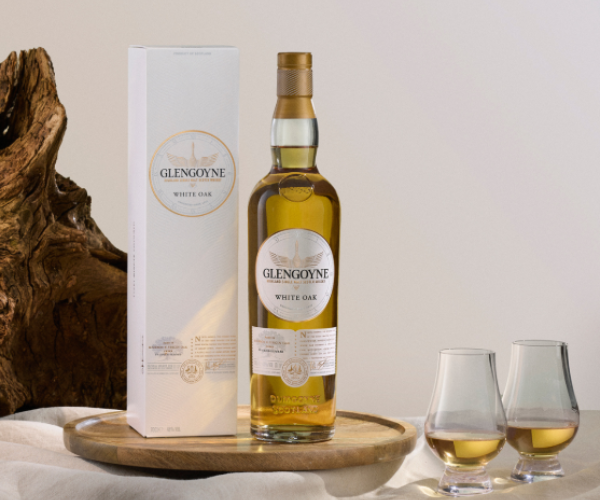
That doesn’t necessarily mean bigger, stronger, or smokier either. Glengoyne White Oak is unpeated, lighter, and approachable, so you’ve got space to play with other flavours.
At Bar Convent Brooklyn last year, an American bartender created a tropical drink with it and jokingly called it “Three Days of Sunshine.” I loved that. The drink worked with the liquid, but there was also a bit of Scottish storytelling behind it.
At the same event, we went completely the other way with Smokehead, using the peat in a Korean chilli soup-inspired Bloody Mary, which ended up being voted among the top ten cocktails at the show.
That’s what I find exciting about single malt. Don’t just ask, “Can I swap the bourbon for Scotch?” Ask what that particular whisky allows you to do. Sometimes it’s your base spirit, sometimes it’s a split base, and sometimes 10ml is all you need.
How do you decide which expressions deserve a permanent place on a back bar when venues have limited space and tighter purchasing budgets?
I’ve sat on both sides of this conversation. As a bartender and bar manager, every bottle on that back bar has to earn its space. Now as an ambassador, I have to remember that I’m asking someone to spend their money, not mine.
It can’t just be a great liquid. What’s its purpose? Is staff going to recommend it? Can it work across neat serves, highballs, and cocktails? Is there a customer looking for it, and can the bar make a sensible margin from it?
I’m also a big believer that fewer bottles with an engaged team can be more valuable than having the entire portfolio gathering dust on the back bar. I’d rather have two expressions that the bartenders genuinely understand, enjoy, and sell than six that are only there because we managed to get them listed.
And that’s where the relationship shouldn’t end with the listing. If a venue gives one of our whiskies space, we should be giving something back: training, menu development, activations, and ultimately helping the team sell it.
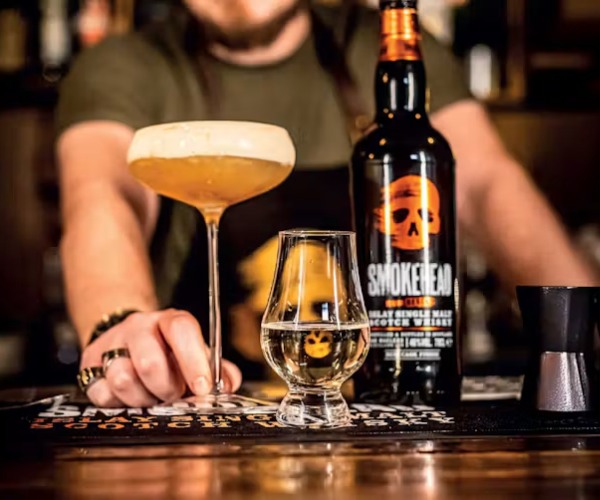
Source: Smokehead
Where do you see the greatest gap between what spirits brands promote and what bartenders need during a busy service?
I think brands sometimes give bartenders a history lesson when what they really need is an elevator pitch.
Do I have time on a Saturday night to tell a customer 200 years of Glengoyne history? Probably not. But if Glengoyne is sitting in a flight in a bar in Williamsburg alongside five other single malts, can I give that bartender the tools to explain in 20 seconds what makes ours different? Absolutely.
That’s where education needs to work on two levels. I want bartenders to know the deeper story, the people, the place, the production, but I also want them to be able to distill all of that into one or two sentences that actually work during service.
And we need to be realistic about the drinks we’re asking them to make. There’s no point creating a beautiful ten-touch cocktail for a brand event if it’s impossible to reproduce when you’re six tickets deep.
For me, good advocacy is taking everything we know about a brand and making it useful behind the bar.
How can an established distiller give bartenders creative freedom while maintaining a clear identity for each brand?
Give them the guardrails, not the recipe.
Bartenders are creative people. If I walk into a great bar and tell the team exactly what cocktail they should make, I’m probably wasting the talent standing in front of me.
My job is to give them enough understanding of the liquid and the personality of the brand that they can interpret it themselves. What are the flavours? What’s the story? What does the brand stand for? And, equally important, what doesn’t make sense for that brand?
That’s a big part of the thinking behind our School of Smoke programme. We give bartenders the tools and knowledge around Smokehead, then challenge them to show us what they’d do with it.
A great example was our Smokehead cocktail competition in Amsterdam last year. We educated the bartenders on the whisky and the brand, then effectively handed it over to them. We ended up with 13 completely different cocktails, all using a smoky Islay single malt as the base spirit.
That’s exactly what I want. We gave them the whisky and the identity, but we didn’t tell them what the answer had to be. The creativity came from them.
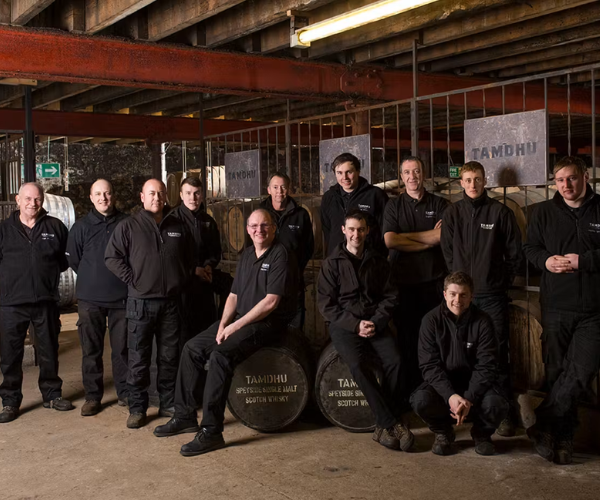
Source: Tamdhu
What makes a bartender education session useful enough to change the way a team recommends or serves a spirit?
It has to be useful, interactive, and, ideally, fun. Bartenders have sat through enough presentations where someone talks at them for an hour and then hands them a branded tote bag.
I want people tasting, asking questions, and challenging me. If we’re talking cocktails, let’s get behind the bar and make drinks. If it’s Tamdhu, can I let you taste the new-make spirit? Can we taste the difference between whisky matured in European oak and American oak? Especially with American bartenders, I want to give them access to things they might not often get the chance to taste.
I also think you have to understand who’s in the room. A whisky specialist and a bartender tasting single malt for the first time don’t necessarily need the same session.
It’s really cool to hear, “That was a great masterclass,” but I love going back to a bar a week later and overhearing a bartender giving a customer their own pitch on the whisky.
I always give bartenders my Instagram as well. If they’ve got a question six months later, they can message me. And if they find themselves in Scotland, we can potentially get them behind the bar for a guest shift at the Edinburgh Gin Distillery. I like keeping that door open.
[[relatedPurchasesItems-65]]
When introducing a premium expression to a venue, how do you build a commercial case that goes beyond its age, production story, or tasting notes?
The first question is: who’s actually going to buy it?
There’s no point putting an expensive bottle on a back bar and hoping somebody eventually points at it. You’ve got to give the venue a reason to sell it and the customer a reason to trade up.
Take Rosebank 31, Tamdhu 21 and Glengoyne 25. Together that’s 77 years of age statements. Could we turn those three whiskies into a luxury flight, with bespoke glassware and a bit of theatre around the serve? Suddenly we’re not just selling three measures of whisky; we’re creating an experience.
The same applies to something like Tamdhu Cigar Malt. Could we work with a venue to build a premium whisky and cigar experience around it? That’s far more interesting commercially than simply putting the bottle on the top shelf.
Of course the numbers still have to work: bottle cost, pour size, margin and rate of sale, but with premium whisky I think we need to help venues create occasions around the liquid, not just give them another expensive bottle to stock.
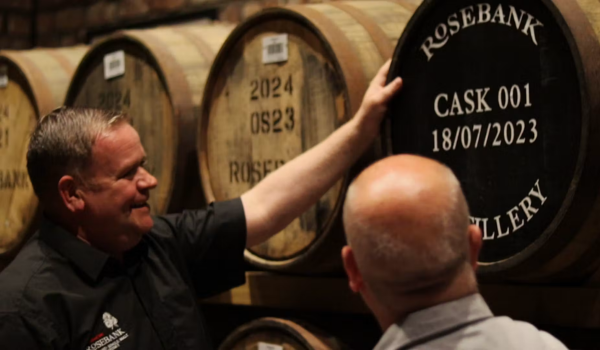
Source: Ian Macleod Distillers
How much do bottle design and ease of use influence a spirit’s chances in the on-premise market?
Does the bottle look premium, and can it still tell you something about the brand? That’s the important bit for me.
Although I do have a game I play with other Brand Ambassadors when we’re travelling: which bottle of whisky would you want if you had to fight a bear?
Amongst the Scotch ambassadors, Tamdhu nearly always wins. It’s an absolute unit of a bottle.
What tells you that a bartender partnership is creating lasting demand rather than a short burst of attention?
For me, it’s what happens when I’m not there.
Anyone can create a bit of noise around a launch night, guest shift, or cocktail competition. I’m much more interested in what the bar looks like three or six months later. Is the bottle still there? Has it been reordered? Are the bartenders still recommending it? Has the cocktail stayed on the menu?
I also keep in touch with the importer and the people actually working in that market. In Chicago and New York, that’s my friends at Winebow. They’ll tell me if a venue is loving the whisky and it’s moving well, or if we actually need to go back in and do a bit more advocacy.
You need that feedback. I might fly into a market, have a brilliant night with a bar team and then fly home thinking everything went amazingly, but the people on the ground can tell you what’s actually happening six months later.
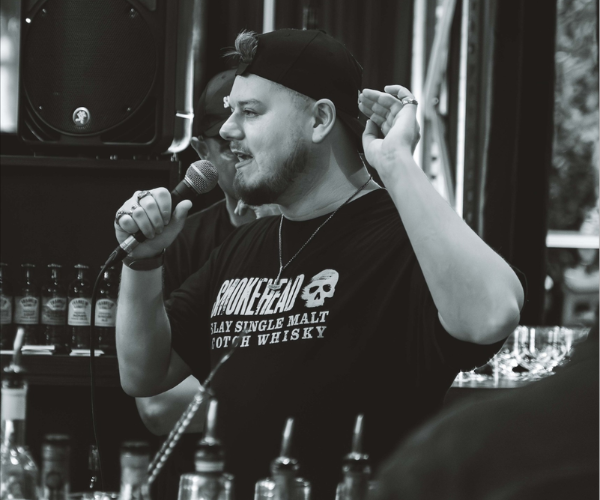
Source: Michael Brown
If you were judging a new spirit for its potential behind the bar, what would make you recommend it to another beverage buyer?
Would I order another one? That’s probably my first test.
Then I go back into bartender mode: does it taste great, can I make money from it, and does it give me an idea?
I get excited about spirits where I take a sip and immediately think, “What can I make with this?” or “I know some of my guests who are going to love this.”
Which conversation with a bartender has stayed with you, and what did it teach you about the business?
Honestly, it’s probably the negative ones. I’ve had bartenders correct my choice of drink or tell me I’m not allowed to mix my whisky.
That’s always stuck with me. We’re in hospitality; our job isn’t to tell people they’re drinking something wrong. If you want your whisky neat, with water, Coke, or in a cocktail, enjoy it.
Educate people, absolutely. Just don’t make them feel stupid for liking what they like.
Plus, a Smokey Cokey is delicious.
Also read:
How to Effectively Pitch Your Brand to a Bartender
Pitch Your Spirits to Bartenders
Know Your Bartenders: Lynn Michele House of Heaven Hill Brands
Enter the 2027 Bartender Spirits Awards for expert evaluation from U.S. bartenders and on-premise buyers. Receive detailed scores, practical feedback on how to improve, market and sell your spirits, and see who judged your products.