



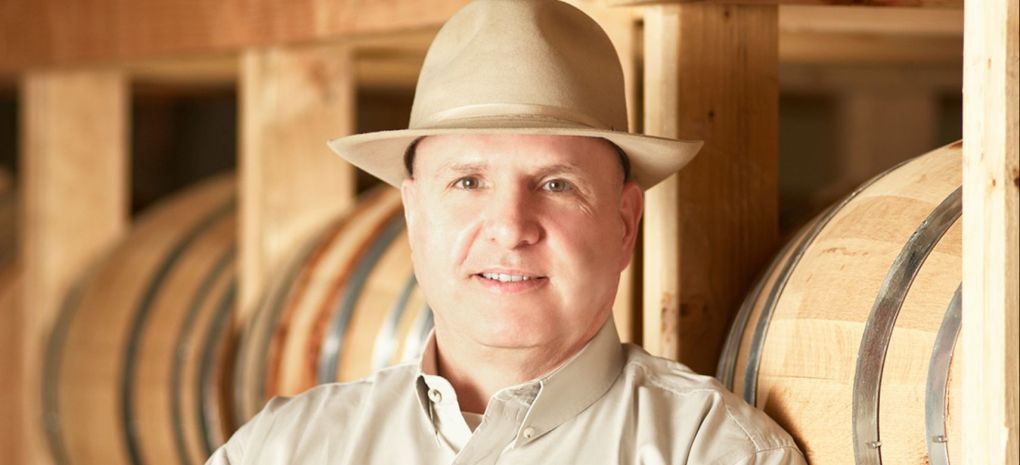
15/10/2026 The co-founder of Dad’s Hat Pennsylvania Rye Whiskey shares his journey from a family tavern in Monessen to crafting rye rooted in Pennsylvania’s distilling heritage.
For Herman Mihalich, co-founder of Dad’s Hat Pennsylvania Rye Whiskey, whiskey and hospitality have been part of his life since childhood. Growing up above his family’s tavern in Monessen, Pennsylvania, introduced him to different whiskey styles and showed him how a local bar could connect a community. Years later, he partnered with John Cooper to bring Pennsylvania rye back to its historical home, naming Dad’s Hat in honour of his father.
In this edition of Know Your Distiller, Herman discusses the inspiration behind Dad’s Hat, the grain choices that define its house style, and how he and John approach barrel selection and finishing. He also reflects on their James Beard Award nomination and his work to reintroduce Rosen rye to Pennsylvania distilling.
You grew up above your family’s tavern in Monessen, Pennsylvania. How did that experience shape your understanding of whiskey and hospitality?
I was exposed to a wide variety of whiskey options, which helped orient my own preferences for what we wanted to produce.
What inspired you to leave your previous career and establish Dad’s Hat Pennsylvania Rye Whiskey with John Cooper?
There was an article in 2006 in the New York Times that talked about the then-new interest in rye whiskey, in particular for making classic cocktails. It started as just some chat among friends about bringing rye whiskey back to its historical home in Pennsylvania. After tracking the progress of the rye whiskey market for the next couple of years, we decided to jump in the pool with both feet.
Dad’s Hat was named in honour of your father. What did he teach you about whiskey, business, and connecting with people?
He was very connected to our community both at the bar and in the local political and civic life locally – creating a network that he supported and that supported him.
Pennsylvania was once one of America’s most important rye-producing regions. What makes the Pennsylvania rye tradition different from other styles of American rye whiskey?
The biggest difference is the traditional mash bill with a high percentage of rye grain (in our case 80%) and malt (in our case 15% two-row malted barley and 5% malted rye) – and usually with no corn. The signature profile is baking spices and orchard fruit, with a dry and warm oak finish.
Can you walk us through the production decisions—from grain selection and fermentation to distillation and maturation—that define the Dad’s Hat house style?
We wanted to be true to the traditional PA style with the high rye mash bill, so we looked for the very best rye grain we could find. We tried a couple of different varietals and settled on Danko as our favorite. We did our early development work at the (now gone) Artisan Distillery Program at Michigan State, and we were able to try several different malt options. We chose a very flavorful 2-row malted barley that brings fruit flavors that balance the spicy rye side. We have been very fortunate to connect with a fantastic farm here in Bucks County, Meadow Brook Farms in Riegelsville, PA. The Mease family takes great care and pride in supplying the very best rye grain quality – late harvest, specific cleaning equipment that works well with rye, ventilated storage to keep the grain in good condition through the year.
[[relatedPurchasesItems-65]]
How do you decide when a whiskey is ready for release, and which sensory characteristics are you looking for when tasting through barrels?
John and I taste the barrels together and compare notes – John has a very broad whiskey experience including scotch and bourbon, and I have a narrower view from my exposure to Pennsylvania rye going back to my days living about our family bar. We share our observations looking for what has become our distinctive style. It can be hard to describe, but we know it when we taste it.
Dad’s Hat has experimented with finishes including port and vermouth barrels. How do you use secondary maturation to create something new without losing the identity of the rye?
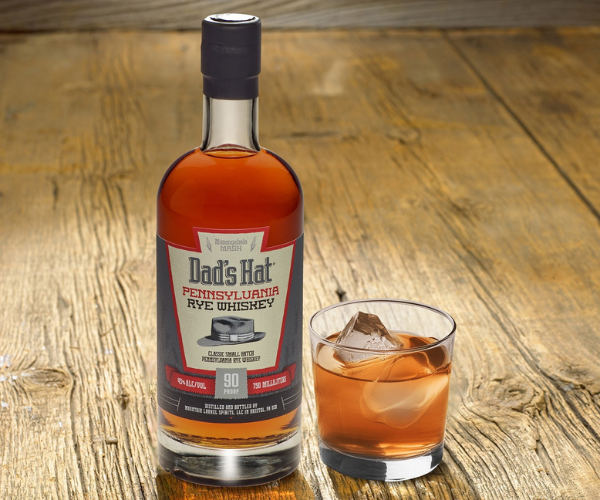
We never let the barrel finishes dominate the rye. We use a blending tank that allows us to mix first-use finishing barrels with refills so we are sure not to allow the finish to dominate. As we do with our other expressions – the 90 Proof Classic and 95 Proof Straight Rye – we keep the blending tanks about half full, never allowing the tanks to empty so the newly chosen barrels will blend with what was bottled last time to keep a consistent style we are looking for.
After more than a decade of building Dad’s Hat, what has been your proudest moment, and what would you still like to accomplish as a distiller and founder?
I guess our proudest moment was when John and I were nominated for a James Beard Award. We greatly appreciated that recognition in the broader culinary community. We are always striving to make our products better and better. We have been experimenting with tweaking the distillation process and trying different rye and malt. Several years ago, I reintroduced Rosen Rye (a variety introduced at Michigan State in 1909 and used just prior to and after Prohibition by the leading rye distilleries) back to Pennsylvania distilling – starting with programs at Penn State and Delaware Valley University. It has taken some time to go from 5 grams of seeds to quantities large enough to ferment and distill, but there are now several farms and distilleries making whiskey with Rosen Rye, albeit in limited quantities so far.
Also Read:
Sakhrani Distillery: Two Women, One Forest, and a New Chapter for Japanese Whisky
The Next Chapter of Asian Whisky Is About Identity, Not Imitation
How to Effectively Pitch Your Brand to a Bartender
Enter the 2027 Bartender Spirits Awards for expert evaluation from U.S. bartenders and on-premise buyers. Receive detailed scores, practical feedback on how to improve, market and sell your spirits, and see who judged your products.