



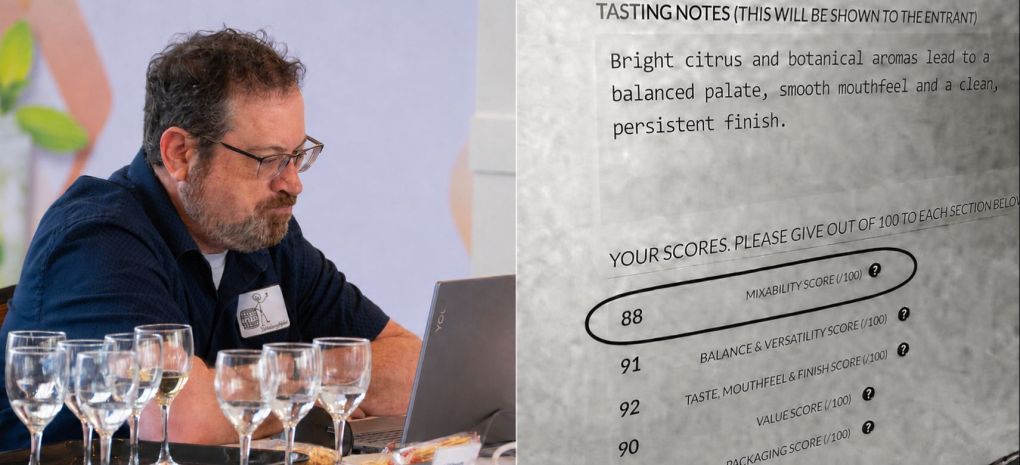
07/09/2026 A complete look at how leading bartenders and on-premise buyers evaluate your spirit for quality, cocktail performance, value, packaging and commercial potential
A great spirit must do more than perform well in a tasting glass. To earn a place behind the bar, it must work in cocktails, complement other ingredients, offer the right value, attract attention on the back bar, and remain practical during service.
That is the thinking behind the Bartender Spirits Awards.
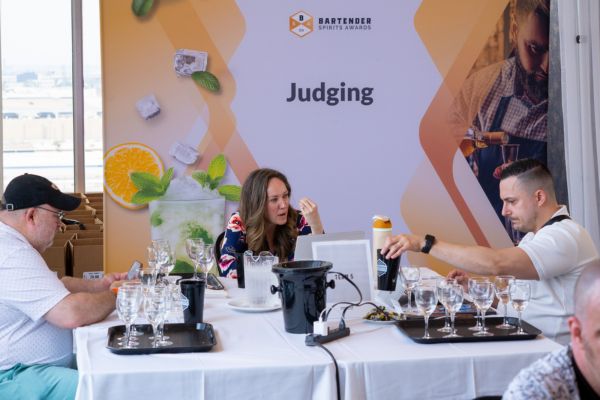
The competition evaluates spirits from the perspective of the people who recommend, pour, mix, and purchase them for the on-premise market. Entries are judged by leading bartenders, beverage directors, bar managers, and other experienced professionals with active knowledge of how spirits succeed in bars, restaurants, hotels and hospitality venues.
The goal is clear: to identify spirits that bartenders would be confident using, recommending, and placing on their back bars.
What Makes the Bartender Spirits Awards Different?
Many spirits competitions concentrate primarily on liquid quality. While quality remains essential at the Bartender Spirits Awards, it is only one part of the commercial decision.
A bartender or beverage buyer must consider several questions before selecting a new spirit:
- Does it taste good?
- Will it work in cocktails?
- Can it perform across different drinks and occasions?
- Does it offer sufficient quality for its price?
- Will the bottle look good on the back bar?
- Is the packaging practical during a busy service?
- Can the bartender confidently recommend it to a guest?
- Does the product bring something useful or distinctive to the drinks program?
The Bartender Spirits Awards scoring system is designed around these real-world considerations. Spirits are assessed across five areas: Mixability; Balance and Versatility; Taste, Mouthfeel and Finish; Value; and Packaging. (bartenderspiritsawards.com)
Who Judges Your Spirits?
Entries are evaluated by professionals working within the United States on-premise industry.
The judging panel includes leading:
- Bartenders
- Bar managers
- Beverage directors
- Restaurant and hospitality buyers
- Cocktail specialists
- On-premise consultants with relevant buying or menu-development responsibilities
Judges are selected for their industry expertise and understanding of what makes a spirit commercially successful in bars, restaurants, pubs, clubs and other hospitality establishments.
This is important because your spirit is not being evaluated only as a tasting sample. It is being considered as a potential working product—something that may need to earn its place in a cocktail, on a menu, and behind a professional bar.
The Five Areas of Evaluation
1. Mixability
Mixability measures how successfully a spirit can be used in cocktails and mixed drinks.
Judges consider whether the spirit can combine effectively with other ingredients without losing its identity. The spirit should contribute character, structure or flavour while still allowing the complete drink to feel balanced.
Judges may consider:
- How well the spirit integrates with common cocktail ingredients
- Whether its defining character remains present when mixed
- How easily it could be used in classic or contemporary cocktails
- Whether it provides bartenders with creative opportunities
- Whether it can support a well-balanced final drink
- Whether the spirit has a clear purpose within a cocktail program
A highly mixable spirit does not have to be neutral. It should offer enough character to influence the cocktail while remaining flexible enough to work with other flavours.
For bartenders, this can make the difference between a bottle that has one narrow application and one that can be used throughout the drinks menu.
2. Balance and Versatility
Balance refers to how successfully the spirit’s aromas, flavours, alcohol, sweetness, acidity, bitterness, oak influence, and texture work together.
No single element should feel unintentionally dominant or disconnected. The spirit should feel complete and well integrated.
Versatility looks at the number of useful roles the product could perform behind the bar.
Judges may consider:
- Whether the aroma and flavour profile feel harmonious
- Whether alcohol is properly integrated
- Whether sweetness, bitterness, acidity and oak are controlled
- Whether the spirit can be served neat, over ice or in cocktails
- Whether it suits more than one cocktail style
- Whether it could appeal across different consumer occasions
- Whether it gives a bar enough flexibility to justify its place in inventory
A balanced and versatile spirit becomes a more attractive stocking option because it can potentially support several serves rather than occupying valuable back-bar space for only one purpose.
3. Taste, Mouthfeel and Finish
This part of the assessment considers the complete sensory experience of the spirit.
Taste covers flavour intensity, definition, balance, complexity, and overall enjoyment. Mouthfeel considers the physical sensation of the liquid across the palate, while finish examines what remains after the spirit has been swallowed or tasted.
- Judges may assess:
- Purity and clarity of flavour
- Intensity and definition
- Complexity and development
- Alcohol integration
- Texture and body
- Smoothness or intentional structure
- Length of the finish
- Quality of the aftertaste
- Overall drinking pleasure
The judges are not looking for every spirit to taste the same. A vodka, gin, rum, whisky, tequila, brandy, and liqueur should each be assessed according to its relevant style and intended character.
The central question is whether the liquid delivers a convincing, enjoyable, and professionally made expression of what it claims to be.
How the Judging Process Works
Step 1: Blind Tasting
The first stage is conducted blind.
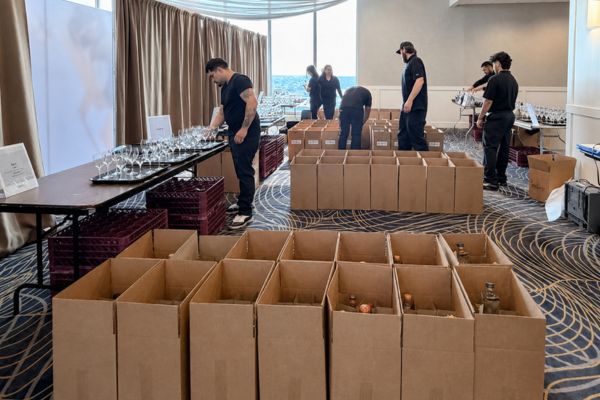
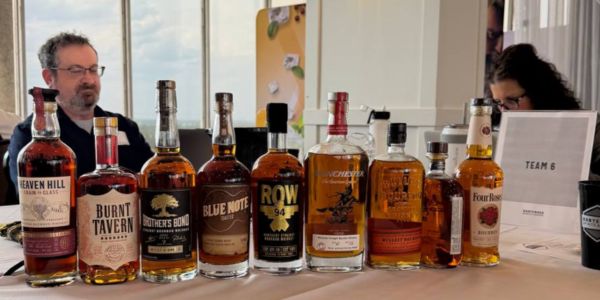
Samples are organized according to relevant factors such as spirit category, style, and origin. Judges assess the liquid without being influenced by the bottle design or brand presentation.
During this stage, the focus is on:
- Mixability
- Balance and versatility
- Taste
- Mouthfeel
- Finish
Blind tasting helps ensure that established brands and emerging producers receive the same impartial consideration. The reputation, marketing budget or visual identity of the brand cannot replace the performance of the liquid. (bartenderspiritsawards.com)
This stage asks a fundamental question:
Does the spirit deliver the quality and performance that a professional bartender needs?
Step 2: Value Evaluation
After the blind tasting, judges are shown the spirit’s price so they can assess its value.
Value does not simply mean being inexpensive. A higher-priced spirit can receive a strong value score if the quality, positioning and experience justify its price. Equally, a lower-priced spirit should still deliver the quality required at its market level.
Judges may consider:
- The quality offered for the price
- Whether the pricing feels appropriate for the spirit’s category
- Whether the product supports a commercially sensible bar serve
- Whether a bartender can confidently recommend it at the resulting menu price
- Whether the spirit is competitive within its intended market position
- Whether the overall proposition provides value to the venue and its guests
The greater the quality delivered relative to the price, the stronger the value assessment is likely to be.
For producers, this stage provides an important commercial reality check. A technically good spirit may still struggle if the price and product proposition are not aligned.
Step 3: Packaging Evaluation

The bottle and packaging are then presented to the judges.
Packaging is evaluated because it directly affects how the spirit is perceived, handled, and sold in an on-premise environment.
Judges consider areas including:
- Creative design
- Label quality
- Clarity of information
- Back-bar appeal
- Shape and size
- Bottle weight
- Ease of handling
- Ease and accuracy of pouring
- Overall functionality during service
A bottle may look impressive in isolation but still be difficult to use behind a busy bar. An unusually wide, heavy, or awkwardly shaped bottle can create practical challenges. Poor label readability can also make it harder for bartenders and guests to identify the brand.
Strong packaging should therefore combine visual impact with operational usefulness. The competition specifically asks judges to consider back-bar appeal and practical factors such as bottle shape, size, weight, and ease of pouring.
How the Final Score Is Calculated
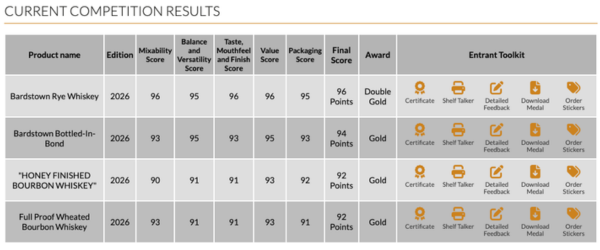
The final Bartender Spirits Awards score combines performance across all five evaluation areas:
Mixability + Balance and Versatility + Taste, Mouthfeel and Finish + Packaging + Value = Final Score
Each area is assessed before the applicable weighted scores are combined into the spirit’s final result.
This means a successful entry needs to present a complete proposition.
Excellent liquid quality is critical, but the final result also reflects whether the spirit is:
- Useful to a bartender
- Versatile enough for a drinks program
- Appropriately priced
- Visually compelling
- Practical to stock and serve
Medal Levels
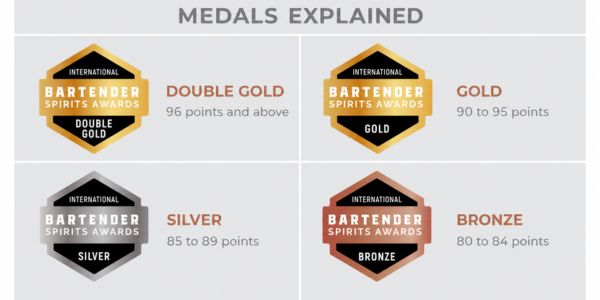
Spirits achieving the required final score can receive the following medals. These medals are intended to recognize spirits with the qualities needed to become credible additions to professional bar inventories.
Special Awards
In addition to individual medals, the Bartender Spirits Awards recognize outstanding entries and producers through major category awards.
These include:
- Spirit of the Year
- Distillery of the Year
- Best Value of the Year
- Best Package of the Year
- Liqueur of the Year
- Gin of the Year
- Vodka of the Year
- Tequila of the Year
- World Whisky of the Year
- Brandy/Cognac of the Year
- Rum of the Year
Producer awards recognize the strongest-performing producers within individual spirit categories. These results are determined through a weighted points system based on the performance of the brands entered by that producer.
Detailed Feedback for Entrants
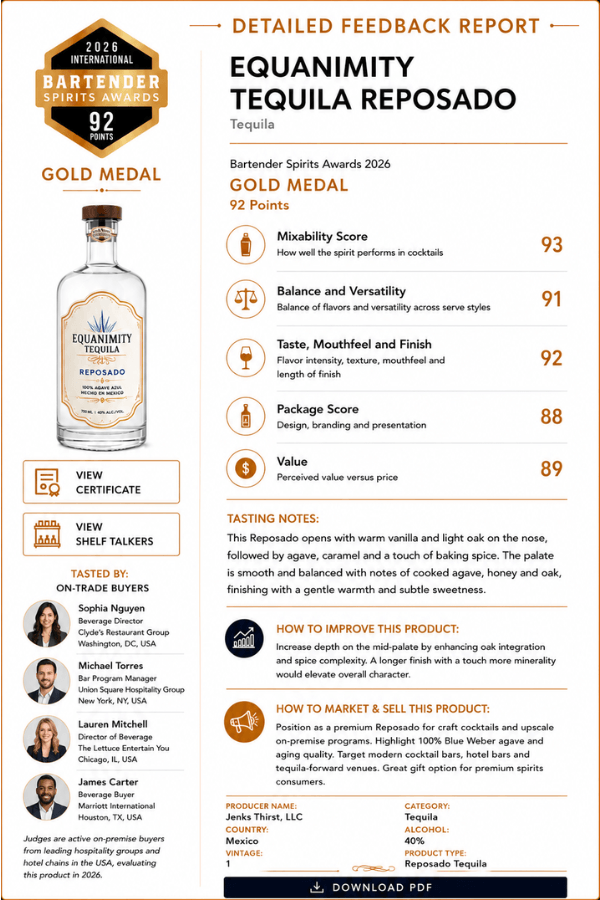
The Bartender Spirits Awards are designed to give producers more than a final score or medal.
Entrants receive detailed feedback across the judging criteria, helping them understand how their spirit was viewed by working on-premise professionals.
The feedback can reveal:
- How bartenders perceive the liquid
- Whether the spirit has sufficient cocktail versatility
- Whether the flavour profile feels balanced
- How the price compares with the quality delivered
- Whether the packaging has strong back-bar appeal
- Whether the bottle is practical during service
- Where the product performs particularly well
- Where improvements could strengthen its commercial proposition
For 2027, the feedback is being made even more useful through two focused areas:
How to Improve
This section helps producers identify aspects of the spirit, positioning, packaging or overall proposition that may benefit from refinement.
The purpose is to provide constructive direction that can support future product development and commercial decision-making.
How to Market and Sell
This section focuses on how the spirit’s strongest attributes could be communicated to bartenders, beverage buyers and on-premise customers.
Judges may identify useful selling points such as:
- A distinctive flavour profile
- Strong cocktail applications
- Exceptional value
- Premium packaging
- A particular serve or drinking occasion
- Suitability for a specific type of venue
- A strong category or regional story
This gives producers practical insight from the people they ultimately want to influence.
What Judges Are Ultimately Looking For
At the end of the process, the judges are answering one central question:
Would this spirit be a strong addition to a professional bar?
To earn a high score, an entry should demonstrate that it can deliver across the complete on-premise proposition:
- The liquid must be enjoyable and well made.
- The spirit should perform behind the bar.
- It should provide useful cocktail possibilities.
- Its quality and price should make commercial sense.
- Its packaging should attract attention and function efficiently.
- Its positioning should give bartenders a clear reason to select and recommend it.
That is why a Bartender Spirits Awards medal has relevance beyond the tasting room. It communicates that the product has been evaluated through the eyes of the professionals who work with spirits every day.
[[relatedPurchasesItems-65]]
A Competition Built for the On-Premise Market
The Bartender Spirits Awards recognizes that success behind the bar depends on more than winning a blind tasting.
A commercially successful spirit must bring together quality, mixability, versatility, value, and presentation. It must work for the bartender, make sense for the buyer, and create an experience that guests are willing to order again.
By evaluating each entry through this complete on-premise lens, the Bartender Spirits Awards helps identify the spirits that deserve attention from bars, restaurants, and hospitality buyers— and gives producers actionable feedback that can help them improve how their brands are made, positioned, and sold.
Also Read:
Bartender Spirits Awards Announces First Round of 2027 Judges
Bartender Spirits Awards Launches Exclusive On-Premise Buyer Intelligence Report For Entrants
More Feedback and Transparency For Entrants At The Bartender Spirits Awards
Enter the 2027 Bartender Spirits Awards for expert evaluation from U.S. bartenders and on-premise buyers. Receive detailed scores, practical feedback on how to improve, market and sell your spirits, and see who judged your products.