


11/04/2026 With 25 years of experience, Starwood's Corporate Beverage Director Steven Minor reveals what it takes to build a beverage program that performs at scale — and what brands get wrong when they come knocking
Walk into any bar at a Starwood property and the drink in your hand is the result of far more deliberation than most guests will ever realize. The tequila was chosen because it's additive-free. The citrus in your margarita was clarified and batched using a technique that prevents oxidation at volume. The spent coffee grounds in your espresso martini were destined for the bin before someone figured out a second life for them. None of this is accidental. It is the result of a deliberately engineered system that is built on sustainability, scalability, and an obsessive attention to the guest experience. And at the center of that system is Steven Minor.
Steven Minor, Corporate Beverage Director at Starwood Hotels, is responsible for that level of intention. Over a 25-year career that began as a busser at The Ritz-Carlton Key Biscayne and has taken him through the kitchens and back bars of Four Seasons, Mandarin Oriental, and 1 Hotels, Minor has developed a philosophy that is equal parts creative, operational, and deeply considered. Today, working across a growing portfolio of international properties, he oversees beverage programs that must feel local and distinctive while performing consistently at scale — a challenge he clearly relishes. We sat down with him to talk craft, commerce, and what he really wants from the brands that pitch him.
Interview with Steven Minor
Can you tell us about your journey in hospitality and how you came to lead beverage programs at a global hotel group like Starwood?
My journey in hospitality began 25 years ago. Originally, I wanted to be a chef, so I started cooking at my uncle's restaurant in South Miami during summer breaks while I was in high school. After graduating, The Ritz-Carlton Key Biscayne opened across the street from where I grew up, and I became part of the opening team. That experience laid the foundation for my understanding of what five-star hospitality truly looks and feels like.
I began as a busser, then ran food, and eventually worked my way up to server and bartender. After five years, I moved to the Four Seasons Miami, where I completed a Manager-in-Training course while continuing to bartend. Upon earning my bachelor's degree from FIU, I relocated to Chicago to take on my first management role with Four Seasons.
My time in Chicago was one of the most formative experiences of my life. I was immersed in one of America's most dynamic food and beverage scenes and had the opportunity to work alongside world-class chefs, bar managers, bartenders, and hospitality professionals. After the birth of my daughter and four long winters, I decided to return home and lead the beverage program at Mandarin Oriental.
There, I became the face of MO Bar, leading a world-class beverage program while also completing an executive development course that gave me valuable insight into other hotel departments, including HR, finance, and rooms. After leaving Mandarin Oriental, I moved north and oversaw two standalone venues at Gulfstream Park: a high-end sports bar and a steakhouse. In that role, I gained exposure to high-volume operations, intricate tap systems, and other aspects of standalone restaurant management that I had not previously experienced.
From there, I joined 1 Hotel South Beach, the marquee property in the Starwood Hotels portfolio. With the largest food and beverage and rooms footprint in the portfolio, it is truly a large-scale operation. Within a few years, I expanded my focus to support other hotels and became part of the new hotel opening team. A couple of years ago, I joined the corporate team and have since had the pleasure of opening five properties across four different countries in just the last year.
As a Corporate Beverage Director, how do you approach building beverage programs that work across multiple properties and guest profiles?
This is one of the biggest challenges. My first priority is identifying and mentoring the talent who will lead the venues on a day-to-day basis. I also conduct market studies and analyze competitive sets to better understand each new market. With access to extensive data, I'm able to engineer menus based on historical performance and guest preferences.
Sustainability is at the core of most decisions, so I work closely with culinary teams to identify opportunities for cross-utilization of ingredients and creative use of scraps, whether through tinctures, syrups, infusions, or other applications. Each beverage program is different, shaped by a strong sense of place and seasonality.
What are the key factors you consider when selecting wines and spirits for large-scale hotel operations?
We aim for at least 75% of our wine lists to come from producers who practice organic, biodynamic, or sustainable farming. My approach is to strike a thoughtful balance between supporting local distillers, brewers, and regional winemakers, where relevant, while also maintaining strong relationships with key national and global partners.
We prioritize partnerships with brands that align with our values, particularly those that demonstrate a commitment to community support and environmental responsibility through efforts to reduce their carbon footprint. As premium tequila continues to perform strongly for us, I am also placing greater emphasis on additive-free tequila offerings.
How do you balance creativity and innovation with consistency across different venues such as bars, restaurants, and banqueting?
We engineer our menus so that most cocktails require three steps or fewer, helping ensure consistency, speed, and execution at scale. By using techniques such as super juice and clarified citrus stocks, we're able to batch high-volume cocktails like our top-selling margaritas, which traditionally would not be ideal for batching because lime juice oxidizes so quickly.
We've also found that embedding sustainability into the drink development process pushes us to be more creative. For example, we repurpose ingredients like spent coffee grounds in our best-selling espresso martinis. While this requires additional SOPs and training, the team has really embraced the process and takes pride in being part of it.
Most importantly, we've been able to measure how many pounds of waste these initiatives divert, giving the staff a tangible understanding of the impact they're making.
When judging spirits, what qualities stand out to you from both a quality and a real-world usability perspective?
Quality of raw ingredients, farming practices, distillation practices, aging practices, and sustainability initiatives.
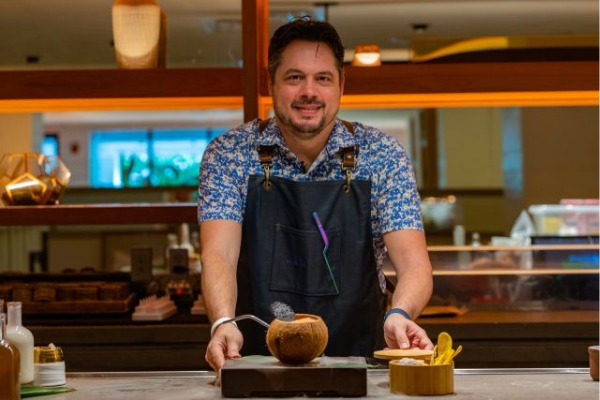
In Frame: Steven Minor (Source: Starwood Hotels- LinkedIn)
How important is versatility — for example, mixability and by-the-glass appeal — when evaluating spirits for hotel programs?
It's extremely important. When evaluating wines by the glass, I also look for opportunities to integrate them into the cocktail program, whether that means using Prosecco in effervescent cocktails or incorporating wine into a sustainable sangria served at one of our pools or rooftop venues.
Agave spirits are especially popular right now, so it's common to see three to four cocktail options built around tequila, mezcal, or a blend of both. These spirits also lend themselves well to modern takes on classic cocktails, including Negronis, Old Fashioneds, and even Martinis.
What trends are you currently seeing in hotel beverage programs, particularly in cocktails and premium spirits?
There's a huge uptick in premium tequila sales. Guests are becoming more educated and curious, taking bartenders' recommendations on the latest additive-free brands that are trending. We're also seeing more interest in the premium category in general, including wines and Champagnes. This is why staff training is so crucial.
In your experience, what do brands often misunderstand about selling into hotel groups?
They sometimes fail to understand the hotel's ethos and brand vision, pitching brands that don't make sense for our specific operation.
What makes a product not just appealing in a tasting, but successful across a multi-unit hospitality environment?
A product can be impressive in a tasting, but that alone does not make it successful across a multi-unit hospitality environment. For me, success comes down to whether it can perform operationally, commercially, and consistently across different properties.
First, it has to resonate with the guest. The liquid needs to be approachable enough to drive repeat orders, while still offering enough character to feel distinctive and elevated. In a hotel environment, that means it must work for a broad range of guest occasions, from an intimate dinner to a poolside cocktail or a high-volume rooftop setting.
Second, it has to make sense operationally. A successful product is one that teams can execute consistently, whether that is in a cocktail, by the glass, or as part of a larger beverage program. That includes availability, reliable distribution, staff education, ease of service, and the ability to integrate naturally into menus across multiple outlets and markets.
Third, it has to be commercially viable. The product needs to support the right margins, fit the pricing strategy of the brand, and justify its place on the list through sales performance. In a multi-unit environment, scalability matters. A product may taste exceptional, but if it cannot be sourced consistently or does not translate across different guest demographics and business models, it becomes difficult to sustain.
Finally, alignment matters. For a sustainable luxury brand, we look closely at whether a producer shares our values, whether that is sustainability, community impact, farming practices, or overall brand ethos. The most successful products are the ones that not only taste great, but also tell a story our teams can stand behind and our guests can connect with.
What advice would you give to producers looking to secure listings within global hotel groups like Starwood?
Producers looking to secure listings within global hotel groups need to think beyond the quality of the liquid. A strong product is the starting point, but what really matters is whether the brand can support the operational, commercial, and strategic needs of a multi-property hospitality business.
First, understand the brand you are approaching. Luxury hotel groups are not looking for one-size-fits-all solutions. They want partners who understand their guest, their outlets, and the difference between a fine-dining restaurant, a rooftop bar, a pool venue, and in-room dining. The more clearly a producer can show where their product fits within that ecosystem, the stronger their case becomes.
Second, be prepared to demonstrate consistency and scale. A product may be exceptional, but if supply, distribution, and support are inconsistent across markets, it becomes difficult to implement across multiple properties. Hotel groups need partners who can deliver reliably, support new openings, and maintain quality from one region to the next.
Third, make the commercial case. Producers should be able to show not only why the product is special, but why it will work on a list, on a back bar, or in a cocktail program. That means understanding price point, margin, guest appeal, and how the product can perform in a real operating environment rather than just in a tasting room.
Education is also critical. The producers who stand out are the ones who invest in training, storytelling, and staff engagement. If a team understands the product, believes in it, and knows how to sell it, the listing has a much better chance of succeeding.
Finally, lead with authenticity and values. For brands like ours, sustainability, community impact, and shared ethos matter. We want to work with producers who are thoughtful about how they farm, produce, package, and operate, and who can back that up in a meaningful way. The best partnerships are not purely transactional; they are built on alignment, trust, and long-term value.
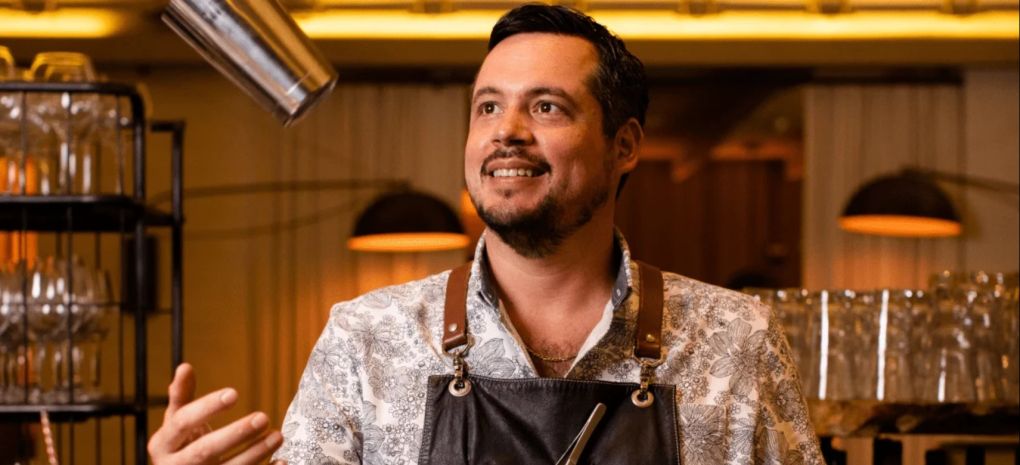
Header image sourced from Starwood Hotels (Website).
Enter the 2027 Bartender Spirits Awards for expert evaluation from U.S. bartenders and on-premise buyers. Receive detailed scores, practical feedback on how to improve, market and sell your spirits, and see who judged your products.